Showing posts with label Food Borne Illness. Show all posts

Thursday, November 2, 2023

Thanksgiving Food Safety

Thanksgiving is a time for family, friends, and feasting, but nothing can ruin the holiday spirit faster than a foodborne illness outbreak. As you prepare to create a memorable Thanksgiving feast, it is crucial to prioritize food safety. Here we will explore the importance of food safety during the holiday season and provide practical tips to ensure your Thanksgiving meal is not only delicious but safe for everyone to enjoy.

Foodborne illnesses are more common than many people realize, and they can result from improper food handling, storage, and cooking. During Thanksgiving, the risks can be heightened due to the complexity and volume of food being prepared. Here are some key reasons to prioritize food safety on this holiday:

  • Large gatherings: Thanksgiving often involves hosting or attending gatherings with numerous guests, which increases the chances of foodborne illnesses spreading if precautions are not taken.
  • A variety of dishes: Thanksgiving meals often include a wide array of dishes, each with its own unique safety considerations. From turkey and stuffing to sides and desserts, it's essential to be vigilant with all components of the meal.
  • Leftovers: Thanksgiving leftovers are a cherished tradition, but if not handled and stored properly, they can become a source of foodborne illness in the days following the holiday.

Tips for Thanksgiving Food Safety

  1. Thawing Your Turkey: If you're serving turkey, ensure it is safely thawed. The safest method is to thaw it in the refrigerator, allowing 24 hours of thawing time for every 4-5 pounds of turkey. You can also use the cold-water method, changing the water every 30 minutes.
  2. Handwashing: Frequent handwashing is one of the simplest yet most effective ways to prevent contamination. Encourage everyone in the kitchen to wash their hands before handling food, especially after handling raw meat.
  3. Cross-Contamination: Keep raw meat separate from ready-to-eat foods and use different cutting boards and utensils to avoid cross-contamination. Sanitize surfaces and utensils after contact with raw meat.
  4. Safe Cooking Temperatures: Invest in a meat thermometer to ensure the turkey and other meats are cooked to a safe internal temperature. The turkey should reach at least 165°F in the thickest part of the thigh.
  5. Stuffing Safety: If you stuff your turkey, make sure the stuffing reaches 165°F as well. It's often safer to cook stuffing separately from the bird to ensure proper cooking.
  6. Keep Hot Foods Hot, Cold Foods Cold: Bacteria thrive at temperatures between 40°F and 140°F. Ensure hot dishes remain above 140°F, and cold dishes stay below 40°F. Use chafing dishes, warming trays, or ice baths as needed.
  7. Leftover Storage: Promptly refrigerate or freeze leftovers within two hours of cooking. Divide large portions into smaller containers for faster cooling. Consume leftovers within 3-4 days or freeze them for longer storage.
  8. Be Allergen Aware: If any of your guests have food allergies or sensitivities, take extra precautions to avoid cross-contact. Label dishes with allergen information and keep allergen-free dishes separate.

Thanksgiving is a time for gratitude, joy, and delicious food. However, it's essential to remember that the enjoyment of the holiday hinges on food safety. By following these tips and being vigilant in the kitchen, you can ensure that your Thanksgiving celebration is not only memorable but also free from the risks of foodborne illnesses. Prioritizing food safety is a small investment that can result in a healthy and happy holiday season for all.

If you have questions or concerns, please contact me, (903) 473-4580 or email Sarah.Latham@ag.tamu.edu. To view upcoming events or additional information please visit https://rains.agrilife.org/ or follow Rains County AgriLife on Facebook.


Thursday, July 7, 2022

July is National Grilling Month

It is a time to celebrate with family, friends, and your favorite food. This month, go outdoors! Breathe in fresh air and enjoy what nature has to offer with flavors from the grill.

Grilling offers the opportunity to eat a varied selection of proteins such as beef, chicken, wild game, seafood, or tofu. Make sure you expand your options by grilling a variety of fruits and vegetables. You can also experiment with rubs, herbs, or marinades. Your options for grilling are endless, smoked or not, direct or indirect heat, or try a grilled salad. One tool all grillers should have in their toolbox is a thermometer. Food should reach a temperature hot enough to kill harmful bacteria and should be kept at 140°F until grilled food is served.

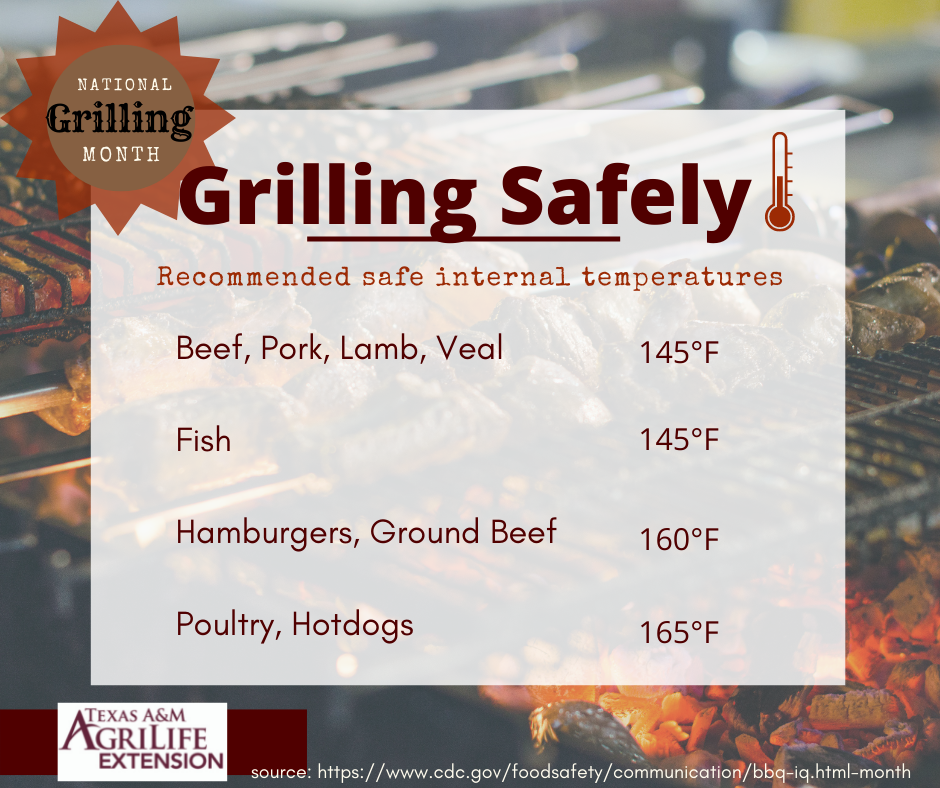
Recommended internal temperatures are:

  • Beef, Pork, Lamb, Veal - 145°F    
  • Hamburgers, Ground Beef - 160°F
  • Fish - 145°F
  • Poultry, Hot Dogs - 165°F

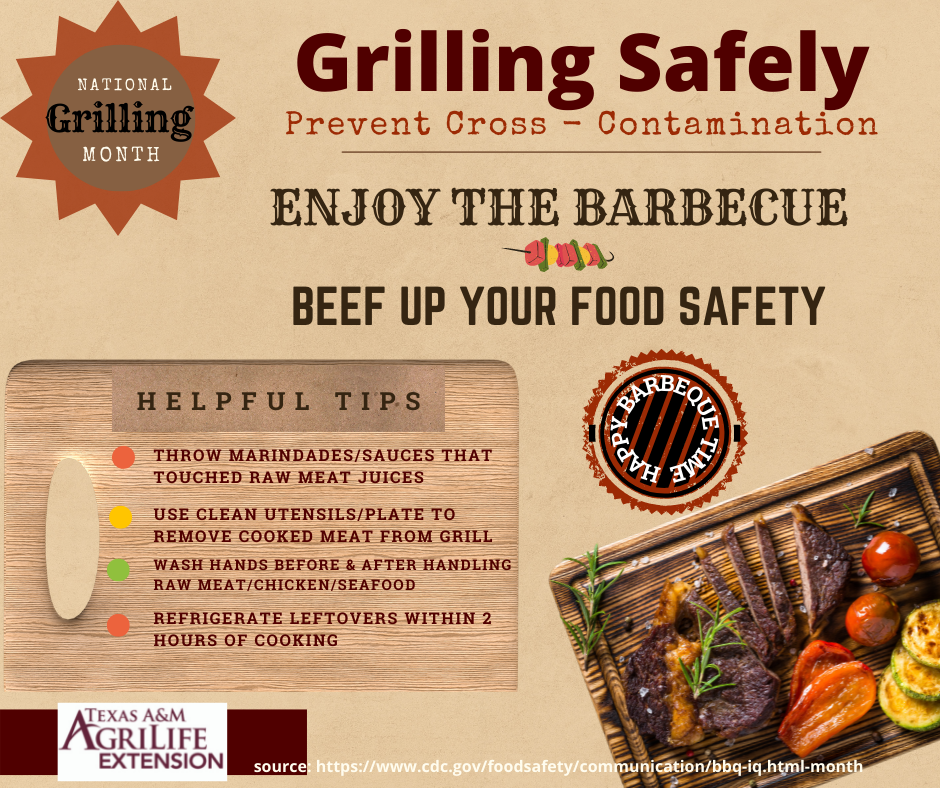
Keep in mind, food borne illnesses increase during summer months because bacteria multiply faster in warm temperatures. Grilling safely follows the same food safety measures used in the kitchen. Make sure you wash your hands before and after handling raw meat, keep raw meats, poultry, and seafood separate from ready-to-eat foods, refrigerate leftovers within 2 hours, and discard leftovers after 4 days.  Grilling is a healthier option than frying because much of the fat contained in or on the food drips out during the grilling process (lowering calories), while preserving vitamins and minerals. In addition to a healthy meal, outdoor grilling also provides an opportunity to spend time in fresh air with family and friends.

This July, take advantage of all the benefits that grilling has to offer.

  • Grilling brings family and friends together.
  • Grilling brings out smiles, cheerfulness, stress-relief, and uplifted moods.
  • Grilling provides entertainment, time to visit with loved ones, and time to make memories.
  • Grilling provides fresh air and Vitamin D (sunshine).
  • Grilling provides an opportunity for children and teens to learn about cooking.

Texas A&M AgriLife Extension has a variety of helpful grilling resources and recipes, visit https://dinnertonight.tamu.edu/?s=grilling  and  https://bbq.tamu.edu/ to learn more.

If you have questions or concerns, please contact me, (903) 473-4580 or email Sarah.Latham@ag.tamu.edu. To view upcoming events or additional information please visit https://rains.agrilife.org/ or follow Rains County AgriLife on Facebook.


Tuesday, January 19, 2021

Food Preservation through Canning: Dial Gauge Testing


Canning is one of the easiest and most common methods of food preservation. Proper canning practices create a vacuum tight seal and preserve food by removing oxygen, destroying enzymes, and preventing growth of undesirable microorganisms, yeasts, and molds (National Center for Home Food Preservation, 2021). Canning has been in practice for centuries, but the USDA produced the first publication on home canning in 1909 (Andress & Kuhn, 1998). The two main types of canning include boiling-water (water bath) canners and pressure canners. Over the next few weeks, I will be discussing various aspects of food preservation through canning.

Over the past few years there has been an increased interest in backyard and community gardening across the country. Gardening attracts people for a variety of reasons; whether it be the security of growing your own food, the allure of consuming fresh fruits and vegetables, or the stress relief associated with working the soil, people are exploring gardening at an impressive rate. If you have ever grown a garden then you know it is not easy and if you are lucky enough to be rewarded with an abundance of your own produce, then you also understand the importance of food preservation.

Before getting into more specific topics, it is important to discuss dial gauge testing on your presser canner. As you handle and use your pressure canner the calibration of the dial gauge can become in accurate and should be tested each year before you begin the canning process. If your dial gauge is inaccurate (providing a lower or higher pressure reading), your food may not reach the proper temperature needed to kill harmful bacteria (lower pressure reading) or the temperature may get too high and overcook your food, resulting in quality and texture issues (higher pressure reading). Canning food at too low a pressure is a safety issue. If you have a pressure canner with a weighted gauge, you do not need to be check annually for accuracy as a weighted gauge does not get out of calibration.

The Rains County Texas A&M AgriLife Extension provides free dial gauge testing (for most dials). If you would like your pressure canner dial gauge tested, please call (903) 473-4580 or email sarah.latham@ag.tamu.edu to set up a test time. Following your dial gauge test, you will receive written test results with instructions to adjust the pounds of pressure for proper cooking as well as information on replacement parts, if needed.  Additionally, gaskets and plugs will be inspected. Overtime, rubber seals may become worn or brittle and need replacing. If needed, information on replacement parts will be provided.

Stay tuned for the next Food Preservation through Canning post discussing the difference between water bath and pressure canning methods.

In the meantime, if you have questions or concerns, please contact me, (903) 473-4580 or email Sarah.Latham@ag.tamu.edu. To view upcoming events or additional information please visit https://rains.agrilife.org/ or follow Rains CountyAgriLife on Facebook.

References:

National Center for Home Food Preservation. (2021) General Canning Information. https://nchfp.uga.edu/how/general.html

Andress, E. & Kuhn, G. (1998). Critical Review of Home Preservation Literature and Current Research. Athens, GA: University of Georgia, Cooperative Extension Service. 


Friday, May 22, 2020

Outdoor Cooking Safety


There are certain aromas that always signify the changing seasons, fireplaces burning, honeysuckle, fresh cut grass, and BBQ grills firing up.  As we move into warmer weather and you start cooking outdoors, here are a few safety tips to keep in mind.

Before you start cooking, the safest way to thaw frozen meat is in the refrigerator. Thawing meat on the counter or in hot water can lead to food borne illness because once items reach 40 degrees, any bacteria that may have been present are able to begin multiplying. Thawing in the refrigerator takes longer and requires advanced meal planning, creating a weekly meal plan can help. The same concept applies to marinating.  You always want to marinate in the refrigerator and not on the counter top. If you are carrying meat to cook at a different location, pack it with ice packs in a cooler and only pack what you can cook and eat that day. Also remember to keep meats separate from other foods and beverages. 

Washing your hands and cleaning utensils after contact with raw meat is important to minimize cross contamination. Cross contamination occurs when bacteria present on meat is transferred to other foods by hands, utensils, or surfaces. Clean all surfaces and utensils after they contact raw meat and before using them with cooked meat. 

When you cook meat, use a food thermometer to make sure the internal temperature gets high enough to make it safe to eat. Beef, pork, veal, lamb, steaks, chops, and roasts are safe to eat when the internal reaches 145 degrees, fish also needs to reach 145 degrees. Ground beef should reach 160 degrees and poultry should reach 165 degrees. Using a food thermometer is a simple way to keep cooking meat safe.

If you are not eating immediately after cooking, place it on the side of the grill off the coals or in an oven set at 200 degrees to keep the meat from dropping below 140 degrees. Keeping cooked meat warm is as important as keeping raw meat cold.

As nice as it is to sit and relax after enjoying your meal, there is one more step you need to do before you can kick your feet up. Any uneaten cooked meat needs to go in the refrigerator as soon as possible. Meat left out more than two hours should be thrown away; and if the weather is warm and above 90 degrees, you have even less time. Uneaten meat in above 90-degree weather should be refrigerated within one hour.

Remembering these easy tips can help keep your outdoor summer meals safe so you can relax and enjoy the fun!

If you have questions or concerns, please contact me, (903) 473-4580 or email Sarah.Latham@ag.tamu.edu.