Showing posts with label Heart Healthy. Show all posts

Friday, February 7, 2025

Healthy Heart

Cardiovascular disease remains the leading cause of death for both males and females in the Unites States with someone dying every 34 seconds as a result. Written a different way, nearly 2,500 Americans die each day from cardiovascular disease. While these numbers may be shocking at first, they should not be overly surprising if you look at health trends across the nation. According to the American Heart Association (2025), nearly 47% of adults live with high blood pressure, 72% of adults are overweight, and roughly 57% of have type 2 diabetes. If you find yourself or a loved one in one (or more) of these statistic groups, it might be time to look at making some lifestyle changes.

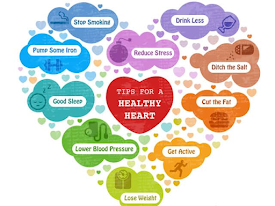
Lowering the risk of cardiovascular disease involves making lifestyle changes and managing health conditions. Start out by slowly making changes and gradually work toward a healthier heart. Look at these tips and identify areas you might need to focus to help you get started.

Maintain a Healthy Diet

  • Eat heart-healthy foods, such as fruits, vegetables, whole grains, and lean proteins.
  • Choose healthy fats (unsaturated fats from olive oil, nuts, and fish) and avoid trans fats.
  • Limit processed foods, refined sugars, and high-sodium foods.
  • Reduce red and processed meats.

Stay Physically Active

  • Aim for at least 150 minutes of moderate-intensity exercise (e.g., brisk walking, swimming) or 75 minutes of vigorous exercise (e.g., running, cycling) per week.
  • Incorporate strength training exercises twice a week.
  • Reduce sedentary behavior by taking breaks from sitting every 30–60 minutes.

Manage Weight

  • Maintain a healthy BMI (18.5–24.9).
  • Reduce abdominal fat, as excess belly fat is linked to a higher risk of heart disease.

Quit Smoking and Limit Alcohol

  • Quit smoking completely—tobacco damages blood vessels and increases CVD risk.
  • Limit alcohol intake to moderate levels (1 drink/day for women, 2 drinks/day for men).

Reduce Stress

  • Practice mindfulness, meditation, yoga, or deep breathing techniques.
  • Ensure adequate sleep (7–9 hours per night).

Get Regular Check-Ups

  • Monitor blood pressure, cholesterol, and blood sugar levels regularly.
  • Follow your doctor’s advice and take medications as prescribed if needed.

Texas A&M AgriLife Extension’s Dinner Tonight Program is a great resource for healthy, tasty, and budget-friendly recipes. Visit https://dinnertonight.tamu.edu or follow Dinner Tonight on Facebook for daily recipes and health tips.

Having a healthy heart requires a mixture of activities and lifestyle changes. Strive to create a healthy balance between exercise, diet, and lifestyle. If healthy habits are new to you, start out slow by making small changes over time. Healthy habits do not form overnight, so it is important to be patient with your progress.

If you have questions or concerns, please contact me, (903) 473-4580 or email Sarah.Latham@ag.tamu.edu. To view upcoming events or additional information please visit https://rains.agrilife.org/ or follow Rains County AgriLife on Facebook.

Types of Heart Disease Graphic

UDMI. (2025). https://www.udmi.net/cardiovascular-disease-risk/


Thursday, February 1, 2024

Reducing Stress for a Healthier Heart

Whether it is from work deadlines, financial struggles, or personal issues, stress shows up often in life. Your body reacts to stress with an increased heart rate and a narrowing of the blood vessels and over time, these little reactions can add up causing damage to your health, particularly your heart. With chronic stress, you are more likely to have high blood pressure, heart disease, diabetes, obesity, and poor sleep. Even other parts of your body, from your lungs to your gut, can take a hit. 

Limiting the amount of stress in your life is often difficult, but you can work on changing how you respond to it. Just like the automatic “fight or flight” response that kicks in when you are scared, causing your muscles to tense, heart rate increases, and brain becomes more alert, your body also has a built-in, healthy relaxation response. When your relaxation response is triggered, breathing and heart rate slow down and blood pressure decreases. 

Luckily, with practice, you can learn to trigger your relaxation response when needed. Try these techniques on your own or find a teacher or class to help you get started. Try not to get discouraged if you are not able to get the hang of it at first, sometimes it takes practice. If one approach is not working for you, try something new. You can learn to de-stress in a variety of ways. 

  • Meditation. One of the most studied approaches for managing stress involves developing your ability to stay focused on the present, instead of worrying about the past or future. Find a quiet location with as few distractions as possible. Get comfortable by either sitting, lying, or walking. Focus your attention on a specific word or set of words, an object, or on your breathing. Let distractions, including thoughts, come and go without judgment. 
  • Progressive muscle relaxation. To feel the effect, first tense your muscles for a few seconds, then relax them. Start by tensing and relaxing your toes, then your calves and on up to your face. Do one muscle group at a time.
  • Deep breathing. Take a slow, deep breath in through your nose, let your stomach or chest expand and then exhale slowly through pursed lips. Repeat a few times. Many people are not accustomed to breathing deeply, but it is relaxing and something you can do anytime, anywhere. 
  • Guided imagery. This involves a series of steps that include relaxing and visualizing the details of a calm, peaceful setting, such as a garden.

Other healthy ways to manage stress include taking a yoga or tai chi class, talking to a professional counselor, joining a stress management program or an art class, or meeting up with a friend for a brisk walk. Being in nature can be very soothing for some people. 

Combining de-stressors like the ones mentioned above with other healthy habits can go a long way toward strengthening your heart. Try to eat more veggies, fruits, and whole grains, while eating less sodium, sugar and saturated fats. Find physical movements you enjoy, like dancing or gardening, and do them regularly. Remember to get enough good, quality sleep and develop a strong social support system. Avoid ways of coping with stress through drinking alcohol, using drugs and other substances, smoking, or overeating. These can increase stress levels and be detrimental to your health. 

Taking care of your heart health is a lifelong journey and learning new ways to make your heart strong is an important way to stay healthy.  

If you have questions or concerns, please contact me, (903) 473-4580 or email Sarah.Latham@ag.tamu.edu. To view upcoming events or additional information please visit https://rains.agrilife.org/ or follow Rains County AgriLife on Facebook.


Thursday, January 19, 2023

Healthy Heart Lifestyle Changes

Making healthy heart lifestyle changes is a positive commitment to yourself and your loved ones, but it is not always a simple process. Creating a healthy lifestyle can be stressful, time consuming, and often filled with confusing and unhealthy choices.

Along with healthy lifestyle activities such as regular exercise, not smoking, and lowering stress levels, eating a variety of healthy foods is excellent for your heart health. The American Dietetic Association recommends adding these foods to your regular diet to jump start your healthy heart journey.

  • Blueberries are packed with the colorful antioxidant, anthocyanin, fiber, vitamin C, and are easy to find year-round. Blueberries are great on their own, but they add amazing flavor to cereal, smoothies, or salads.
  • The American Heart Association recommends including omega-3 rich foods into your diet at least twice a week for a healthy heart. Salmon is loaded with protein and omega-3 fatty acids.  Salmon is easy to cook and has a pleasant flavor. Try grilled or baked salmon paired with a fresh spinach salad or grilled vegetables.
  • For many, oatmeal is a staple in a heart healthy diet. Whole grain oats are an excellent source of vitamins, minerals, and most importantly, cholesterol-lowering fiber. Oatmeal is tasty on its own or it can be dolled up by adding various fruits and berries. Oatmeal is a great substitute when baking. Replacing one-third of the flour in a pancake, muffin, or cookie recipe with oatmeal will add in fiber without taking away from the taste! If you are interested in trying overnight oats for an easy breakfast, visit http://agentsarah.blogspot.com/ for several overnight oat recipes.
  • The benefits of eating spinach are too long to list. Just remember, Popeye was on to something! Spinach is loaded with vitamins and minerals, notably folate and iron. If you or someone you know is pregnant or trying to become pregnant spinach should be a regular on the menu. Fresh spinach is delicious in a salad or blended up in a green smoothie.

Texas A&M AgriLife Extension’s Dinner Tonight Program is a great resource for healthy, tasty, and budget-friendly recipes. Visit https://dinnertonight.tamu.edu or follow Dinner Tonight on Facebook for daily recipes and health tips.

Having a healthy heart requires a mixture of activities and lifestyle changes. Strive to create a healthy balance between exercise, diet, and lifestyle. If healthy habits are new to you, start out slow by making small changes over time. Healthy habits do not form overnight, so it is important to be patient with you progress. Remember, Rome was not built in a day!

If you have questions or concerns, please contact me, Sarah.Latham@ag.tamu.edu or (903) 473-4580. To view upcoming events or additional information please visit https://rains.agrilife.org/ or follow Rains County AgriLife on Facebook.


Thursday, March 3, 2022

Sleep More for Good Health

sleepy owl
As we move into March, this seemed like a good time to highlight National Sleep Awareness Week, March 13th - 19th, and encourage a focus on quality sleep as a means of improving general health and well-being. Sleep deprivation is harmful to our cognitive functions, inadequate sleep can lead to decreased attention and alertness, altered abilities to plan and organize, reduced creativity, and an increase in unhealthy risk-taking. Although the amount of sleep needed and the effects associated with sleep deprivation will vary slightly from person to person, the importance of adequate sleep remains unchanged.

The CDC recommends 7 or more hours of sleep each night for adults and even more for children; school age children should get between 9-11 hours of sleep each night. Lack of sleep has been shown to contribute to weight gain and increase the risk of diseases, like heart disease and stroke.1 On average, adults living in Rains County got less sleep than the state and national average.

Erica Reyes, Program Specialist with Texas A&M AgriLife Extension, says, “regarding personal wellness, we often hear about the need for a good diet and an active lifestyle. Adequate sleep is the third component of a healthy lifestyle although it is often overlooked or underemphasized; getting the recommended hours is important.” Reyes also recommends health care providers assist by assessing patients’ sleep habits and discussing the importance of sleep, “it is important to assist in raising awareness by discussing sleep habits and by displaying patient education materials on sleep, sleep hygiene, and specific sleep disorders in waiting and exam rooms.”

Over the past two decades, the importance of sleep has received increased attention. Melatonin (a hormone that is naturally produced by the body to induce sleep) supplement sales have sky rocked, increasing roughly 500% from $62 million in 2003 to $378 million in 2014; 20% of Americans have tried a natural sleep remedy in the past year. In addition to sleep supplements, wearable devices and smartphone apps have expanded to include sleep functions; nearly 30% of adults in the US use a smartphone app to track their sleep.3  

Our attempts to reduce weight, maintain peak performance at work, and communicate with others are all dependent on getting enough sleep. Here are three tips to help obtain the rest your body requires to function healthily.

Stick to a schedule:  Our brain determines the time frames for our day and night schedule depending on our sleep routine and sleep cycles. When we disrupt those time frames by significantly altering our sleeping patterns for a few days, we might spend the remainder of the week off our schedule. Sticking to a specific bedtime and wake time is important in establishing a good sleep pattern.

Turn down the lights: Light plays an integral role in regulating our body’s internal clock responsible for sleep (aka: circadian rhythm). When our eyes process light, our body’s natural production of melatonin slows down (and sometimes stops completely) which minimizes drowsiness. As a part of your sleep schedule, select a time each evening to lower light levels in your home.

Limit caffeine intake: Those who consume four or more caffeinated drinks per day are more prone to sleeplessness, so be mindful of coffee, tea, sodas, energy drinks, and their serving sizes. While most caffeine is consumed through beverages, it is important to know

Exercise: Regular exercise throughout the week may help boost the production of the hormone melatonin, termed the "sleep hormone." Simply ensure that your activity does not take place too close to bedtime, or it may have the opposite effect.

If you have tried these tips and still have trouble reaching the recommended hours of sleep, you may have a sleep disorder and need to talk with your doctor. Prepare for questions your doctor might ask by keeping a sleep journal.

If you have questions or concerns, please contact me, (903) 473-4580 or email Sarah.Latham@ag.tamu.edu.  To view upcoming events or additional information please visit https://rains.agrilife.org/ or follow Rains County AgriLife on Facebook.

Friday, May 7, 2021

Salty Situation

Do you ever wonder if you should work on reducing sodium or salt intake? We hear many different messages about reducing the amount of sodium, salt, and sodium containing ingredients in the foods we eat. Surprisingly, sodium is found more often in processed foods, such as casseroles, pizza, and cold cuts, than what you add from your saltshaker. Understanding how much sodium you need and knowing how to identify foods high in sodium can help you easily make changes in your diet.

Sodium chloride, more commonly known as salt, is roughly 40% sodium and 60% chloride; it is used to flavor food and is also often used as a binder and stabilizer. Salt is also commonly used as a food preservative since bacteria is unable to thrive in high amounts of salt. Sodium is not all bad, the human body requires a small amount of sodium (estimated to be about 500 mg) for vital functions such as conducting nerve impulses, contracting and relaxing muscles, and maintaining the proper balance of water and minerals. However, too much sodium in our diet can lead to high blood pressure, heart disease, and stroke. Additionally, too much sodium in our diet may weaken bones by pulling calcium from them, which is something we need to avoid as we age.

The Dietary Guidelines for Americans recommends limiting daily sodium intake to less than 2,300 milligrams. Eating too much sodium may lead to high blood pressure, which may increase the risk for a heart attack and stroke. Most Americans consume far more sodium per day than we need; the average American is estimated to consume at least 3400 mg of sodium per day. Reducing sodium, which includes salt or other sodium containing ingredients, is beneficial in reducing risks for health-related conditions. 

Reading the nutrition facts label (found on most food containers) will help you identify foods low or high in sodium. The percent daily value (based on a 2000 calorie per day diet) listed on the nutrition facts label can help you quickly determine if a food is low or high in sodium. Pay close attention to the serving size listed on a food label and make sure the amount you eat matches the amount on the label. Information listed on the nutrition facts label is per serving (as described on the label) and most serving sizes are much smaller than what we think. For example, when you eat a bowl of soup, how many saltine crackers do you eat? The serving size for saltine crackers is 5 crackers. Five crackers roughly contain 135 mg or 6% of the recommended daily value. If you eat ten crackers with your soup, you need to double the numbers listed on the label, bringing your sodium intake up to 270 mg or 12% of the recommended daily value… and this is just the crackers, how much sodium is in the soup?

You may be shocked to learn how much sodium is in some of your favorite foods. Major sources of sodium include processed foods like canned products, breads, deli meats, snack foods, and mixed dishes. For healthier options, look for foods labeled as low or reduced sodium. The National Heart, Lung, and Blood Institute recommends adopting the DASH (Dietary Approaches to Stop Hypertension) eating plan to help reduce sodium intake and reduce the risk of high blood-pressure. Please contact the Rains County Texas A&M AgriLife Extension office if you would like more information on the DASH eating plan.

If you have questions or concerns, please contact me, (903) 473-4580 or email Sarah.Latham@ag.tamu.edu. To view upcoming events or additional information please visit https://rains.agrilife.org/ or follow Rains County AgriLife on Facebook.

Thursday, July 16, 2020

Eating a Healthy Breakfast


We have always been told, “breakfast is the most important meal.” Making sure you and your family eat a healthy breakfast is the best way to start each day on the right track. A healthy breakfast can help optimize mental function, support healthy weight goals, and build a strong immune system. The U.S. Department of Agriculture (www.choosemyplate.gov) recommends a healthy meal include a balance of fruit, vegetables, grains, and protein.


A healthy breakfast should include, but is not limited to, the following components:
  • Whole grains such as oats, whole wheat bread, or quinoa
  • Lean protein such as eggs or turkey sausage
  • Fruit or vegetables such as berries, bananas, broccoli, or spinach

These breakfast components assist our bodies with day to day bodily functions. Whole grains give us energy and fiber. Protein helps to keep us fuller longer, and fruit and vegetables provide us with vitamins, antioxidants, and fiber. Amy Valdez, Extension Program Specialist with Texas A&M AgriLife Extension adds, “this combination of food is going to make sure you stay satisfied throughout the day and will keep you energized and focused.”

Meal planning and prepping are two relatively simple ways to help you stay on track.
  • Plan - Planning is key when it comes to breakfast. Create a menu of breakfast options for the week. When shopping, stick to these foods to help reduce the chance of choosing unhealthy options and to save you time and money.
  • Prepare– If time is limited in the morning, we tend to choose the first foods we see, which may not always be the healthiest. This can be avoided by either preparing the entire week’s meals or simply prepare portions of your breakfast to save you time.

If you need a few ideas to get you started, Overnight Vanilla Oats and Egg Muffins are two of my favorite breakfast on the go recipes (click here to download recipe cards). 
  • Overnight Vanilla Oats – 1 cup oats, 1 cup vanilla flavored almond milk, and ¼ cup of your favorite nuts and/or fruit are optional. Mix the oats and almond milk together and pour into two 8 oz wide mouth jars with lids, splitting evenly. Secure the lids and refrigerate overnight. You may add your optional items with the initial mixture or in the morning, depending on how you like them (depending on your optional add-in, soaking overnight in the mixture may make them mushy). Oats may be stored up to five days in the refrigerator, just remember, the longer they sit, the softer your oats will become. (Makes 2 servings. Serving Size: 8 oz. Per Serving (before optional add-ins): 195 Calories, 3.9g Fat, 34.7g Carbohydrates, 5.9g Protein.)
  • Egg Muffins – 5 eggs, ½ cup real bacon bits, ½ cup grated cheddar cheese, salt and pepper to taste. Preheat oven to 400°F. Grease a 6-count muffin tin (or use silicon muffin baking cups). Mix ingredients together in a bowl. Divide evenly in muffin cups (about ¾ full). Bake until muffins are set and beginning to brown (roughly 12-15 minutes). Muffins may be stored up to five days in the refrigerator. Just grab one, heat it up (or eat it cold), and go! (Makes 6 servings. Serving size: 1 Muffin. Per Serving: 124 Calories, 8.8g Fat, .4g Carbohydrates, 11g Protein.)

If you have questions or concerns, please contact me, (903) 473-4580 or email Sarah.Latham@ag.tamu.edu. Follow Rains CountyAgriLife on Facebook for additional information and upcoming events.


Thursday, January 16, 2020

Eat Smart to Live a Heart Healthy Life


Following a healthy lifestyle by eating balanced nutritious meals, engaging in daily physical activities, and avoiding smoking and excessive alcohol consumption may help reduce the risk factors of heart disease. Heart disease is the leading cause of death among American men and women causing about 647,000 deaths per year (Centers for Disease Control and Prevention). Heart disease can be prevented or delayed by controlling several underlying medical conditions such as diabetes, high blood pressure, elevated blood cholesterol levels, and weight gain.

Several diet-related chronic diseases including heart disease can be prevented or managed by following a healthy eating pattern—one that is nutritionally adequate with appropriate calories (Dietary Guidelines for Americans 2015-2020). Sumathi Venkatesh, a Health Specialist with Texas A&M AgriLife Extension Service shares a few tips to eat smart for a heart healthy life:
  • Fruits and vegetables are essential components of a healthy diet. However, most people do not eat enough fruits and vegetables. A person consuming 2000 calories should include about 2½ cups of vegetables and 2 cups of fruits every day. You may include them in a variety of forms—fresh, canned, dried or frozen.
  • Choose low-fat dairy products. They provide the same nutrients as the regular kind but with less fat and calories.
  • Avoid trans fats and limit saturated fats to less than 10% of your daily calories. Replace butter with spreads made of monounsaturated fats (canola, olive, peanut, and sunflower) or polyunsaturated fats (corn, sunflower, and soybean). Mono- and polyunsaturated fats are liquid at room temperature and are ideal for daily cooking.
  • Limit refined grains by making half of your grains made up of whole grains. Whole grains are good sources of dietary fiber and many nutrients.
  • Include at least 8 ounces of seafood per week. Including seafood that are high in omega 3 fatty acids may protect your heart by reducing inflammation.
  • Reduce sodium intake to less than 2300 mg per day. However, the ideal limit for most adults and those who are at risk for heart disease is no more than 1500 mg per day. Excess dietary sodium increases blood volume and may increase the risk for high blood pressure.
  • Avoid excess calories from sugar sweetened beverages. The calories from added sugars should be less than 10% of your daily calories.
  • Lastly, practicing portion control is key. Excess calories may lead to weight gain.

If you have questions, concerns, would like additional information on heart health, please call (903) 455-9885, email Sarah.Latham@ag.tamu.edu.  For additional information on area issues and events, follow us on Facebook, by simply searching for Hunt County AgriLife. 


Thursday, May 23, 2019

May is Blood Pressure Awareness Month. Do you know your numbers?


According to the American Heart Association, nearly half of American adults are living with high blood pressure (also called hypertension), yet many are unaware that they have it. In kids and teens, elevated blood pressure is becoming increasingly common, which may lead to health problems later in life. During May’s National High Blood Pressure Education Month, Texas A&M AgriLife Extension is working to raise awareness and share the most important tips to prevent or manage high blood pressure. 

Knowing your risk factors is the first key prevention strategy. “Besides age, genetics and a family history of high blood pressure, there are lifestyle risk factors that you can control, such as obesity, poor diet, physical inactivity, smoking, and excessive alcohol consumption,” said Dr. Sumathi Venkatesh, a health specialist with Texas A&M AgriLife Extension Service. “Certain medical conditions like diabetes can also increase the risk of developing high blood pressure,” she added.

Because there are no obvious symptoms or warning signs for high blood pressure, it’s often called a “silent killer.” That’s why regularly monitoring your blood pressure and understanding your results is another key prevention strategy. A blood pressure measurement includes two numbers: The top number measures systolic pressure, which is the force of the blood against the arteries when the heart beats, and the bottom number measures diastolic pressure, which is when the heart is relaxing between beats. A blood pressure reading of 120/80 is considered normal, while readings above 130/80 mean a diagnosis of high blood pressure. 

Knowing your numbers could save your life. “Chronic uncontrolled high blood pressure can damage blood vessels and result in heart attack or stroke, the two leading causes of death in the U.S.,” said Dr. Venkatesh. “High blood pressure may also contribute to kidney disease, vision problems, and peripheral artery disease, but the good news is that high blood pressure can be controlled by taking prescribed medications and following a healthy lifestyle.” 

Following The Dietary Approaches to Stop Hypertension, or “DASH” dietary pattern, is one of the best ways to prevent or treat high blood pressure. This healthy approach includes eating plenty of fruits and vegetables plus whole grains, nuts, fish, lean meat and low-fat dairy products, while limiting added sugars and saturated fats. Sodium intake should not exceed 1500 mg per day, so it’s important to check the sodium content listed on the nutrition facts label for any packaged foods. Other key prevention strategies include maintaining a healthy weight, exercising for at least 30 minutes a day, and avoiding smoking and excessive alcohol consumption. Finally, be sure to talk with your doctor if you have any health concerns or challenges. Healthy blood pressure is a target within reach.

For help understanding your blood pressure numbers, click here

As always, if you have questions, concerns, or just want to chat, please feel free to call (903) 455-9885, email Sarah.Latham@ag.tamu.edu, or come by the Hunt County Extension office, 2217 Washington Street, Greenville, Texas, 75401. You can also read more about this and many more topics on our website, https://hunt.agrilife.org.


Wednesday, February 6, 2019

Spinach

Spinach is a popular vegetable that can be enjoyed raw in salads and sandwiches, cooked in soups, or sautéed as a side.  Spinach, best grown in mild climates with an abundance of fertile, high quality soil and water, put Crystal City, Texas on the map in 1917. This southern area of Texas is best known as the Wintergarden region and is recognized by farmers for its long growing seasons. From 1930-1950, the Wintergarden region experienced a “spinach boom,” making Texas the top spinach producing state in the US. Over time, consumer demands influenced production in Texas, leading to varieties such as “baby” and “teen” flat-leaf spinach, according to Larry Stein, Texas A&M AgriLife Extension Horticulturist. From 2006-2016, Texas experienced a 29% increase in spinach production, jumping from 32,025 tons of spinach produced to 41,215.


Other than being a popular commodity in Texas, spinach has many nutritional benefits, including its
high vitamin and mineral counts, caloric density, and its contributions to heart health. Nutritional facts for 100g (or 3 ⅓ cups) of spinach:
  • 2.86g of protein
  • 3.63g of carbs
  • 0.39g of fat
  • 28.1mg of Vitamin C
  • 469μg of Vitamin A
  • 482.9μg of Vitamin K
  • 194μg of Folate 

Spinach is also very low in calories; one cup of raw greens contains roughly 7 calories (USDA).

While spinach is often found in salads and soups, it can also be enjoyed in pastas and dips. AgriLife Extension’s Dinner Tonight has developed a plethora of recipes to incorporate spinach into your meals as a main ingredient, including Chicken and Spinach Lasagna, Spinach Quiche, Black bean and Spinach Quesadillas, and Spinach Pasta Toss. To find more nutritious spinach recipes, visit dinnertonight.tamu.edu/.

As always, if you have questions, concerns, or just want to chat, please feel free to call (903) 455-9885, email Sarah.Latham@ag.tamu.edu, or come by the Hunt County Extension office, 2217 Washington Street, Greenville, Texas, 75401. You can also read more about this and many more topics on my blog,  http://agentsarah.blogspot.com/

References:
USDA. (2019). Spinach.  SNAP-Ed Connection. https://snaped.fns.usda.gov/seasonal-produce-guide/spinach.


Friday, January 11, 2019

Loving your heart - for the health of it!

While February is best known for Valentine’s Day, did you know that it is also American Heart Month? This February, Texas A&M AgriLife Extension Service recommends giving your heart love, too, by being aware of heart problems and the steps you can take to prevent them.

Coronary Heart Disease (CHD) is the leading cause of death in the United States, accounting for 610,000 deaths each year, according to the Center for Disease Control (CDC). The root cause of heart disease is plaque formation and buildup that occurs when coronary arteries become clogged by cholesterol, fatty deposits, and calcium. Buildup causes arteries to become narrow, making it difficult for oxygen and blood to flow through the body and to the organs.

Anyone is at risk for developing heart disease. However, people who have high blood pressure, high cholesterol, and smoke cigarettes are at higher risk. According to the CDC, about 47% of Americans have at least one of these risk factors. Additional factors that contribute to the progression of the disease include:

                     Diabetes
                     Being overweight or obese
                     Poor diet
                     Physical inactivity
                     Excessive alcohol use
                     Having a family history of heart disease
                     Age, especially in women 55 and older

Dr. Sumathi Venkatesh, Extension Program Specialist with Healthy South Texas, recommends taking preventative measures by becoming aware of risk factors and consulting with a doctor on a regular basis. Developing a treatment plan with a physician can help stabilize blood pressure, blood sugar, and blood cholesterol levels. Other preventative measures include:

                     Eating a healthy diet that includes fruits and vegetables
                     Being physically active
                     Stopping the use of cigarettes
                     Limiting alcohol intake
                     Reducing sodium intake

When it comes to pursuing a healthy lifestyle, try incorporating heart healthy foods into your diet such as green, leafy vegetables, avocadoes, whole grains, and seeds. Add these ingredients into meals like Quinoa Cakes, a Fresh Berry Caprese Salad, or an Avocado Mandarin Salad by using recipes from AgriLife Extension’s Dinner Tonight. To find more recipes, visit dinnertonight.tamu.edu.

As always, if you have questions, concerns, or just want to chat, please feel free to call (903) 455-9885, email Sarah.Latham@ag.tamu.edu, or come by the Hunt County Extension office, 2217 Washington Street, Greenville, Texas, 75401. You can also read more about this and many more topics on my blog,  http://agentsarah.blogspot.com/

References:

Centers for Disease Control. (2019). https://www.cdc.gov/heartdisease/facts.htm


Thursday, February 8, 2018

Have a Healthy Heart... Join Walk Across Texas!

I’m sure you’ve noticed, stores are filled with Valentine hearts these days. The next time you see one of these hearts, think about your own heart, and ask yourself if you are living a heart-healthy lifestyle.  While the rates of death due to cardiovascular disease are on the decline, it is still the number one cause of death in the United States. Many risk factors of cardiovascular disease can be controlled by a living a healthy lifestyle and making wise choices every day. A pro-active approach to heart health also involves visiting your doctor to find out about your cholesterol and blood pressure.

While some risk factors of heart disease are out of our control, such as age and genetics, there are many things we can control through our everyday choices. Everyday choices include what you eat and how much you exercise. A heart-healthy diet is nutrient rich and includes lots of fresh fruits and vegetables, whole grains, and fat-free or low-fat dairy products. It limits foods that are high in calories and low in nutrients, and limits saturated fat, trans fat, cholesterol, and sodium. It is recommended that healthy people age 18-65 exercise at least 30 minutes a day, five days a week. The exercise you do can be whatever you enjoy the most—swimming, jogging, walking, biking, or playing a sport—the important thing is that you are engaging in physical activity. Finally, as part of a heart-healthy lifestyle, you should make the pledge to quit smoking or vow to never start. While many people associate smoking with lung cancer, which is true, it is also a major risk factor for heart disease.

One bonus to living a heart-healthy lifestyle is that it is also a cancer-preventative lifestyle. Not smoking, exercising regularly, and eating healthfully will help reduce your risks of developing certain types of cancers along with greatly benefiting your heart health.

Seeing one of cupid’s hearts should also remind you to visit your doctor and find out how your own heart may be doing. You should have your blood pressure measured to know if you have pre-hypertension or hypertension, which is high blood pressure. It is estimated that one in three U.S. adults has high blood pressure. Having hypertension or pre-hypertension can increase your risk of stroke, heart attack, heart failure, and kidney failure. While at the doctor’s office, you should also have a blood test to determine your cholesterol levels. Having high cholesterol levels may also put you at increased risk for heart disease. Knowing you have high cholesterol or blood pressure can help you and your doctor make decisions about changes you can make to help lower or decrease these numbers and lower other risk factors.

If you are looking to increase your physical activity, consider joining us as we Walk Across Texas!  March 6th marks the beginning of the Hunt County Walk Across Texas Challenge.  Walk Across Texas! is a free 8-week program designed to help establish a regular habit of physical activity.  Teams of 8 join to walk the 834 miles across Texas, from Orange to El Paso.  Each person on a team of 8 is tasked with walking approximately 1.5 miles per day.  That seems like a lot to many people, but really, it’s only about 3000 steps and most people can go that distance in less than 30 minutes or achieve it throughout their daily activities.  In many cases, just becoming aware of how much (or how little) you move throughout the day is the first step to a healthier lifestyle.  The Walk Across Texas! program is a great way to jump start your exercise routine while spending time with friends and families.

The American Heart Association recommends 150 minutes of physical activity (moderate exercise) each week, just over 20 minutes each day.  Many become discouraged with exercise before they even begin because they focus on the idea of 150 minutes of exercise each week, which can seem overwhelming.  Keep in mind, everyone must start somewhere, and any activity is better than no activity!

Interested in creating a team and/or joining the Hunt County Walk Across Texas! Challenge?  Team captain packets are available at the Hunt County Extension office or you may register online at http://walkacrosstexas.tamu.edu.

As always, if you have questions, concerns, or just want to chat, please feel free to come by the Hunt County Extension office, 2217 Washington Street, Greenville, Texas, 75401 or email Sarah.Latham@ag.tamu.edu